
Loading...
Serving Cabot, AR and surrounding areas. (501) 394-0030
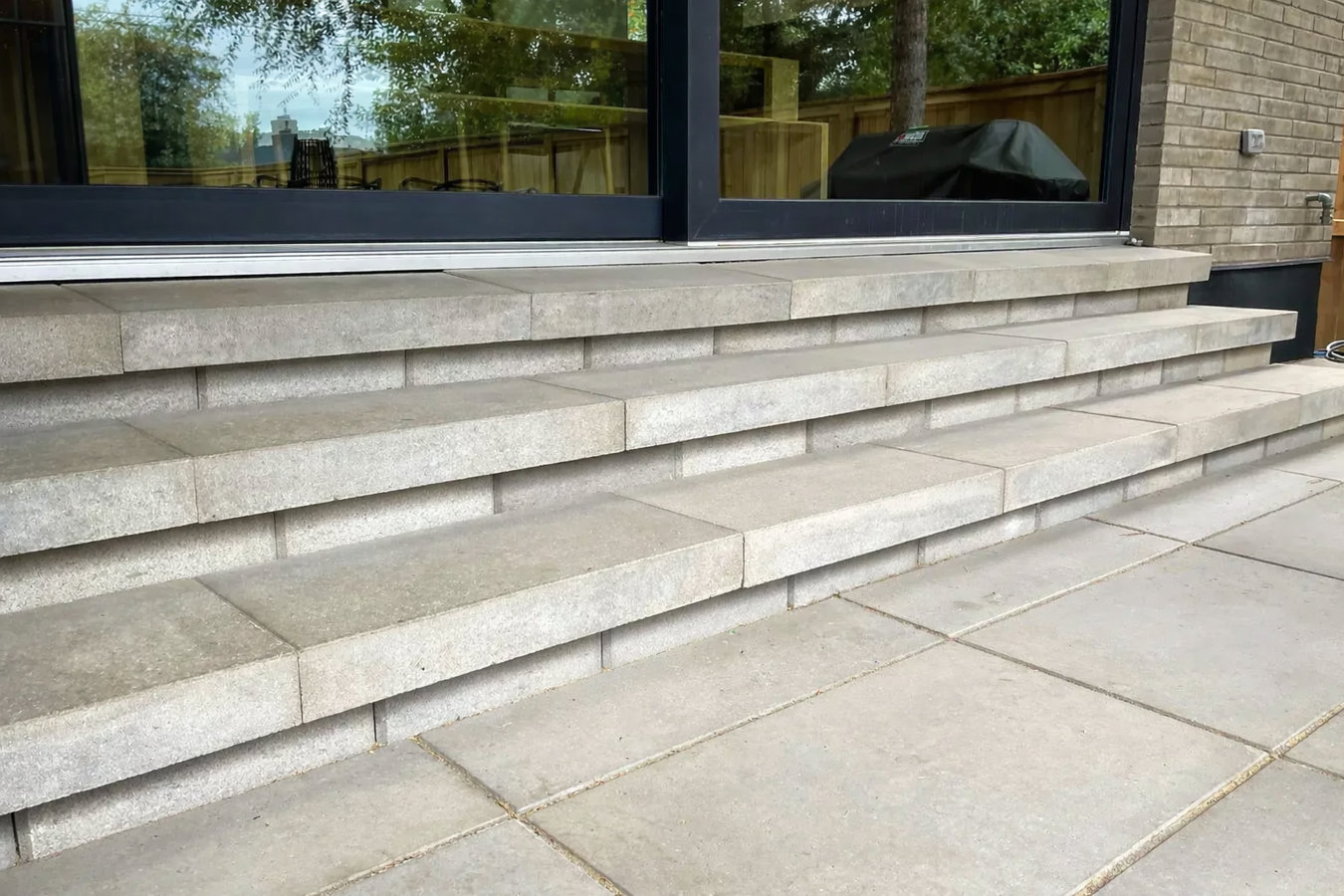
Cracked or tilting steps are a safety hazard - and in Cabot clay soil, they get worse every season. We build concrete steps that stay level and look good for decades.
Concrete steps construction in Cabot involves poured-in-place steps from ground level to your front door, side entry, or back deck. A standard front-entry set of three to five steps takes one to two days of active work, with the concrete safe for light foot traffic within 24 to 48 hours of the pour.
The short answer to why so many Cabot steps fail early is the clay soil. The ground in Lonoke County expands when it gets wet and shrinks when it dries out, and that constant movement puts pressure on anything sitting on top of it. Steps that were poured on a poorly prepared base - without compacted gravel fill and proper drainage - start cracking and tilting within a few years. A lot of Cabot homes were built in the 1990s and early 2000s, and the original steps from that construction boom are now at the age where the shortcuts are showing.
For homeowners who also want to address grade changes in their yard, steps pair naturally with concrete retaining walls to create a connected, stable entry from one level to another.
Small surface lines can be sealed and monitored, but cracks that go all the way through a step or that have caused one section to sit higher than another are a safety hazard. In Cabot clay soil, once a crack opens up, water gets in and the soil beneath shifts - making the problem worse each winter.
If you can see a gap between your steps and your foundation, or if the steps feel like they rock when you stand on them, the base underneath has shifted. This is common in Lonoke County's expansive clay soil and will not fix itself - the steps need to come out and be rebuilt on a proper base.
When the top layer of concrete starts to peel away in thin chips or flakes, it is called spalling. In Cabot, this is often caused by years of freeze-thaw cycles working on concrete that was never sealed. Once spalling starts, it spreads - and a rough surface becomes a slip hazard, especially when wet.
Many Cabot homes built during those decades had steps poured quickly with minimal base prep. If your steps are 20 to 30 years old and you are seeing any cracking, settling, or surface wear, it is worth having a contractor take a look - catching it early often means repair rather than full replacement.
We handle full step replacement - removing old steps, preparing a proper base, and pouring new steps that are level, even, and built for the soil conditions here. For homeowners adding a new entry point after a deck addition or door change, we build from scratch to match the exact height and width the project requires. Every job includes a textured finish so the surface grips in wet conditions, and we can pair steps with slab foundation building when the project involves a connected structure.
Handrail installation is available as part of the job or as a framed-in option where anchor points are set in the concrete so a rail can be added later without drilling into finished steps. If your household includes older family members or young children, a rail is worth planning for upfront rather than trying to add it afterward.
Suits homeowners whose existing steps are cracking, tilting, or spalling and need a full rebuild on a properly prepared base.
Suits homeowners who have added a back deck, changed a door location, or need steps to match a new grade level.
Suits homeowners with three or more risers, older family members, or anyone who wants a safer, code-compliant entry.
Central Arkansas sees both extremes that are hardest on concrete steps: hot, humid summers that cause concrete mixed too wet to shrink and crack as it cures, and winter freeze-thaw cycles that push moisture into an unsealed surface and expand it from the inside. Cabot winters are mild compared to northern states, but temperatures do dip below freezing regularly from December through February - enough to damage steps that were never sealed. Experienced local contractors schedule summer pours for early morning to avoid the worst of the heat and adjust the mix to slow the drying process.
Many Cabot homes from the 1990s and 2000s growth era sit on lots where the soil was graded during construction and has been settling ever since. Homeowners in communities we serve across Lonoke, AR and Beebe, AR often reach out after years of watching a crack slowly widen and a step edge slowly rise. That is a normal consequence of clay soil movement, and a proper rebuild on a compacted gravel base stops the cycle.
When you reach out, we ask a few basic questions - how many steps, whether old steps need to come out, and if you want a handrail. We schedule a quick site visit that typically takes 15 to 30 minutes, and you will have a written estimate within one business day.
We check the ground beneath your current steps, the height from your door threshold to the ground, and any drainage issues nearby. This is where a thorough contractor earns their fee - they are looking for the things that cause steps to fail, not just measuring for the form.
On day one, the crew removes your old steps and hauls the debris away. They dig out unstable soil, compact a gravel base, and build the wood form. In Cabot's clay soil, this base preparation step is what separates steps that hold for 30 years from ones that crack in three.
The concrete is poured and the crew finishes the surface - including a slip-resistant texture and clean edges. Steps are safe for light foot traffic within 24 to 48 hours. Before we leave, we walk you through the finished work and discuss sealing to protect against Cabot's freeze-thaw cycles.
Written quote, no obligation. We reply within one business day.
(501) 394-0030Clay soil expands when wet and shrinks when dry, which is why so many steps in Lonoke County crack or tilt within a few years. We remove unstable soil, compact a gravel base, and build a stable foundation before a single bucket of concrete is poured - not an optional step we skip to save time.
Uneven step heights are a tripping hazard and a sign of rushed forming work. Every set of steps we build has consistent riser heights and a textured surface so there are no surprises underfoot, whether it is a dry summer afternoon or a wet December morning.
A large share of Cabot's housing stock was built in the 1990s and early 2000s, and the original concrete steps from that era are now 20 to 30 years old. We work on homes across Cabot's established neighborhoods and know what those original pours typically look like and what is needed to replace them properly.
Arkansas requires a license from the state Contractors Licensing Board for construction work over a set dollar threshold - most step jobs qualify. Ask for the license number and verify it before signing anything. A contractor who cannot provide that number is a risk not worth taking. Arkansas Contractors Licensing Board lists licensed contractors publicly so you can verify before signing.
Steps that look fine on day one but fail within a few years almost always come down to the same two problems: a base that was not prepared for local soil movement, and a surface that was never sealed against moisture. We address both on every job - not as extras, but as the standard way we work.
For guidance on concrete construction standards, the Portland Cement Association and the International Code Council both publish resources on residential stair construction and handrail requirements.
When your steps connect to a new addition or structure, a properly poured slab foundation underneath ensures everything stays level together.
Learn MorePair new steps with a retaining wall to manage grade changes across your yard and stop soil movement at the source.
Learn MoreSpring and fall book up fast in central Arkansas - reach out now to lock in your project date before the season fills.